Ops & Routines
Schedulers, service timetables, incident triage, runbook executors.
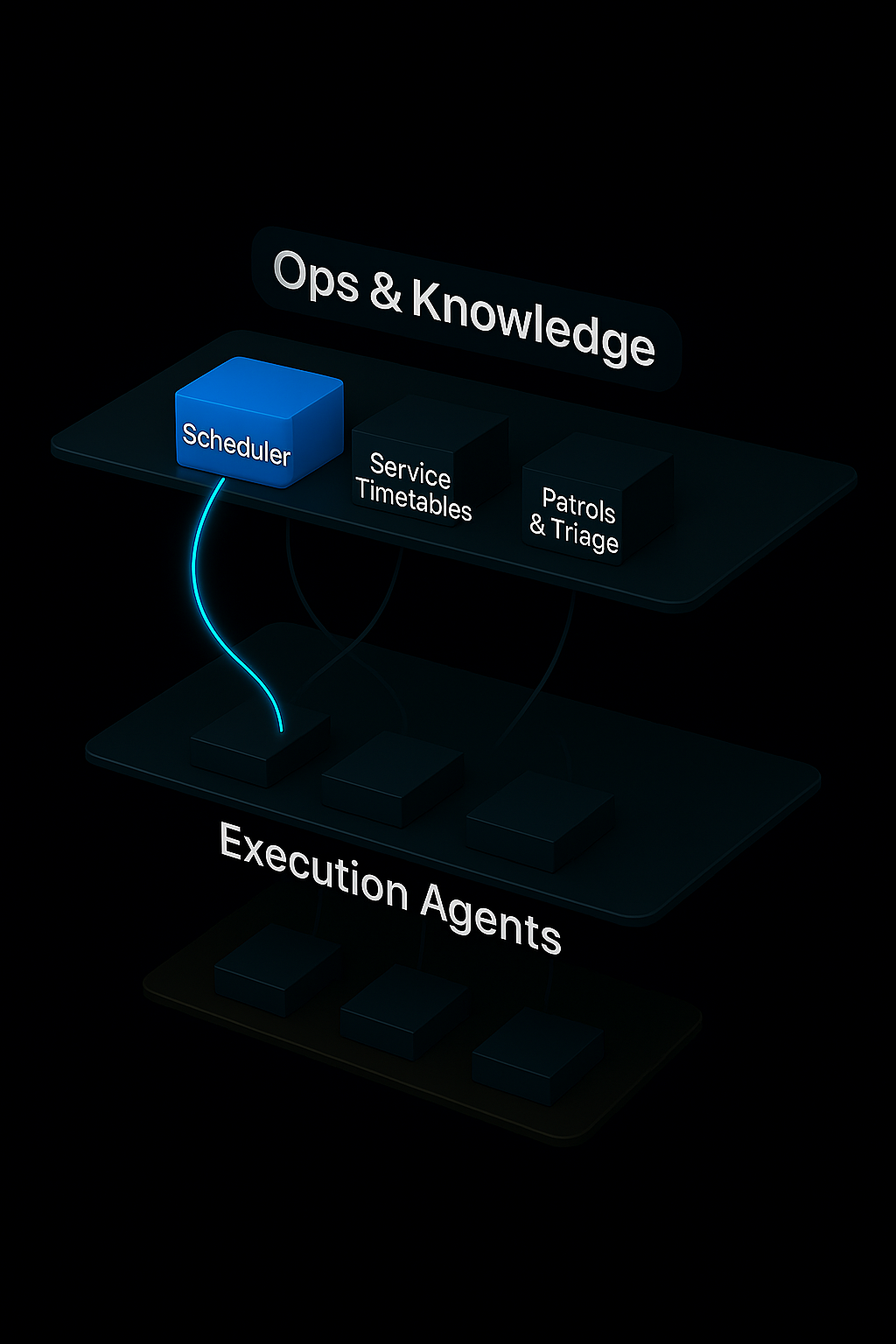
ApprovalsSLA-aware
Pegesis Agents
Design domain experts, wire their tools, and let the Cognitive Loop coordinate decisions across your stack. Every step is traced, approved, and reversible.
Agent Library
Mix and match prebuilt roles. Tune goals, policy, and tools — then deploy in minutes.
Schedulers, service timetables, incident triage, runbook executors.
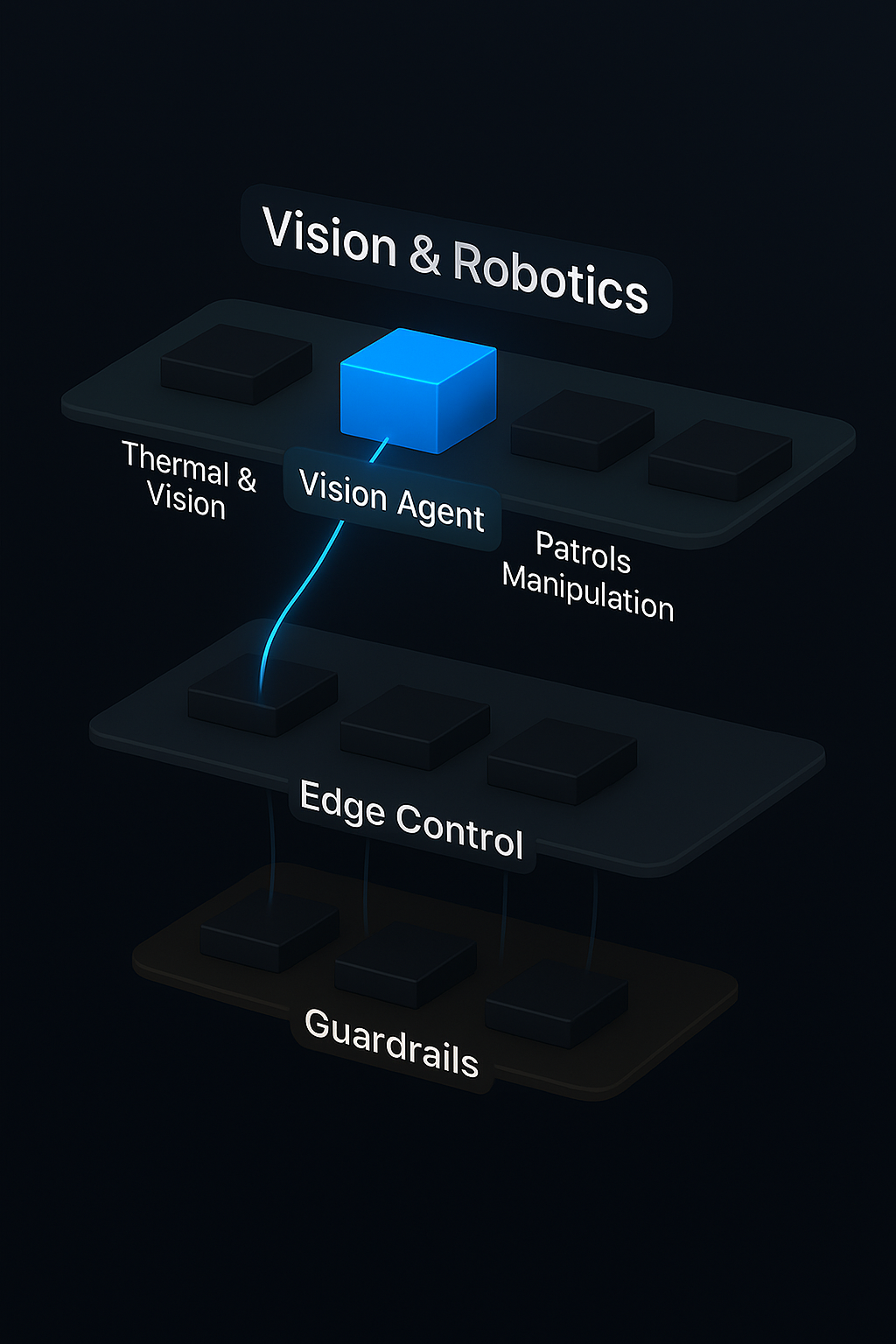
Deploy agents that see and act — from thermal and optical detection for safety and maintenance, to autonomous patrols, inventory checks, and robotic manipulators on Orin and Edge devices. Each action follows policy and operates within guardrails.
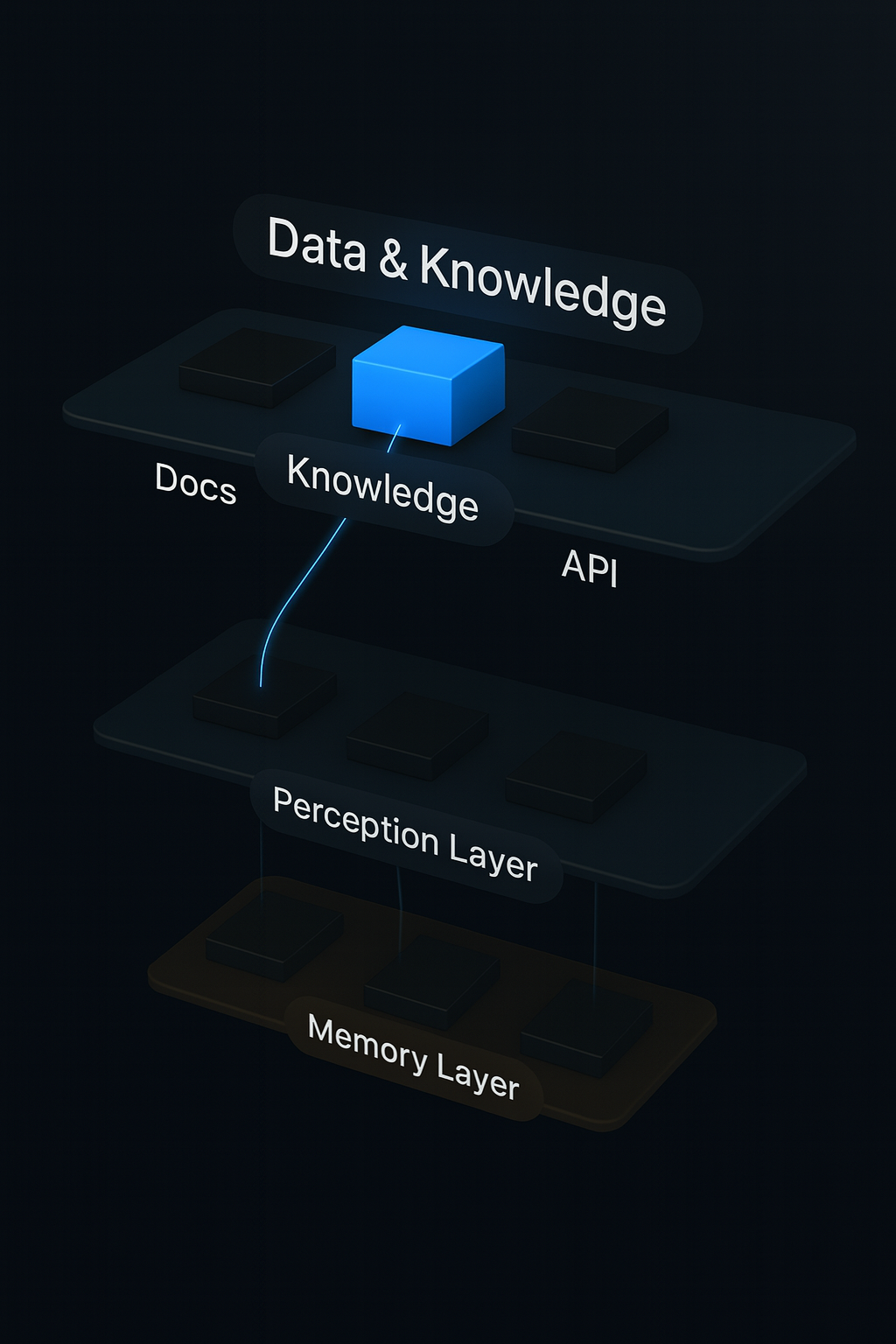
ETL, schema induction, graph synthesis, retrieval planning, report drafting.
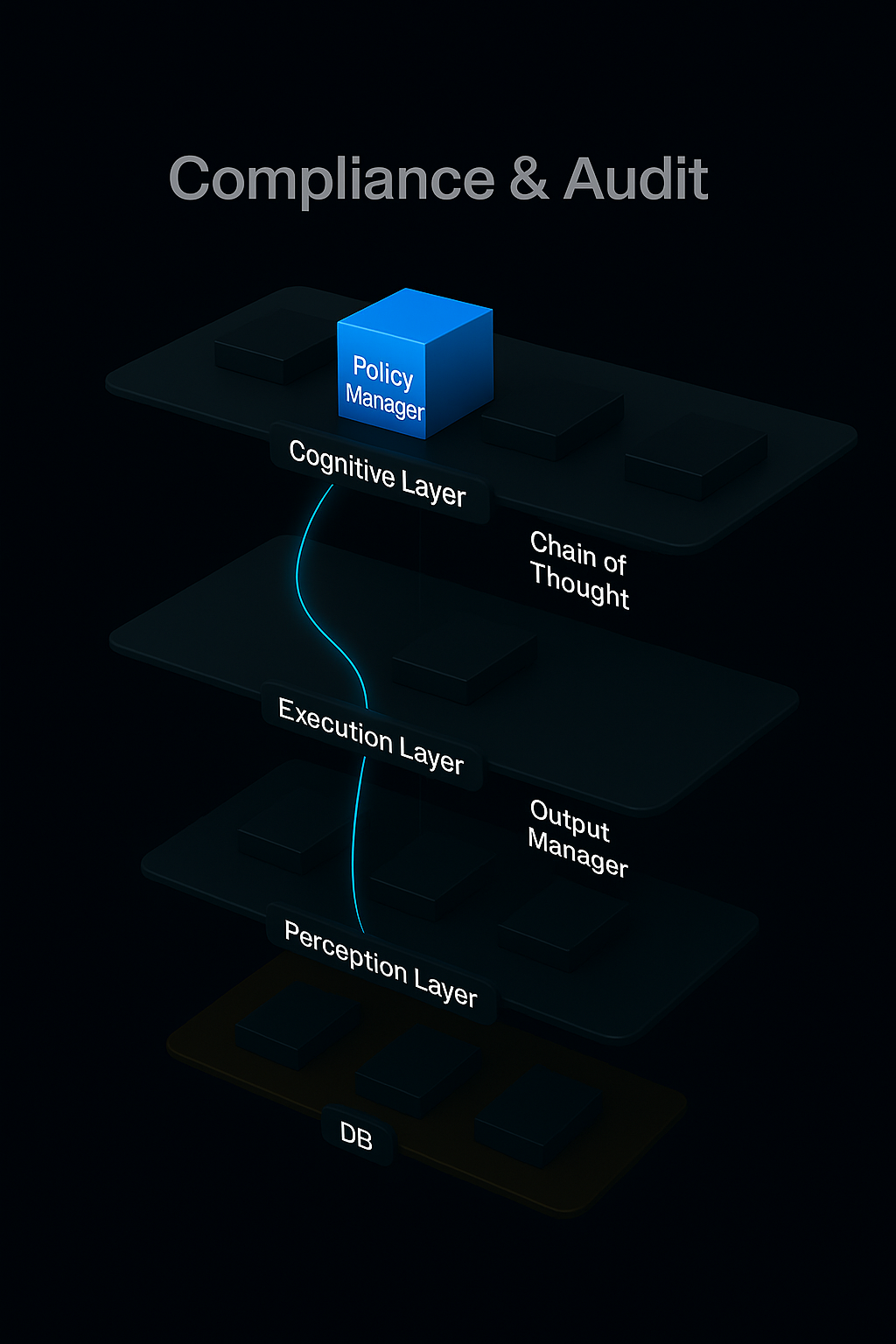
IAM checks, least-privilege enforcement, continuous audit, red-team simulations.
Agent Blueprint
Agents are declared with roles, capabilities, tools, and policy. Pegesis generates the runtime, connects to the Signal Bus, and enforces AGS++ rules.
# agents/cleaning-supervisor.yaml
name: cleaning-supervisor
role: "Oversee service routes and ensure SLA compliance"
skills:
  - plan_tasks
  - verify_service
  - summarize_findings
policy:
  approvals:
    - action: dispatch_worker
      require: supervisor
  limits:
    max_zone_radius_m: 50
    max_priority: 3
memory:
  persistence: project
  retrieval:
    strategy: graph+routing
    filters: [site:carlington]
triggers:
  - event: zone_marker.detected
    where: { zone: [5,6,7,8,10] }
  - cron: "*/10 * * * *" # every 10 minutes
handoff:
  - to: compliance-auditor
    when: risk.score >= 0.7
  - to: robotics-patrol
    when: requires_patrol == true
tools:
  - name: work_orders
    actions: [create, assign, close]
  - name: occupancy_api
    actions: [read]
  - name: notifier
    actions: [email, sms]
Composition
Use playbooks to connect agents into plans. The Cognitive Loop coordinates delegation, critiques, and conflict resolution.
Graph of steps with guardrails, retries, and human-in-the-loop approvals.
Handoff by policy, capability match, or load. Preserve trace across agents.
Voting, weighted expertise, or confidence aggregation for high-stakes tasks.
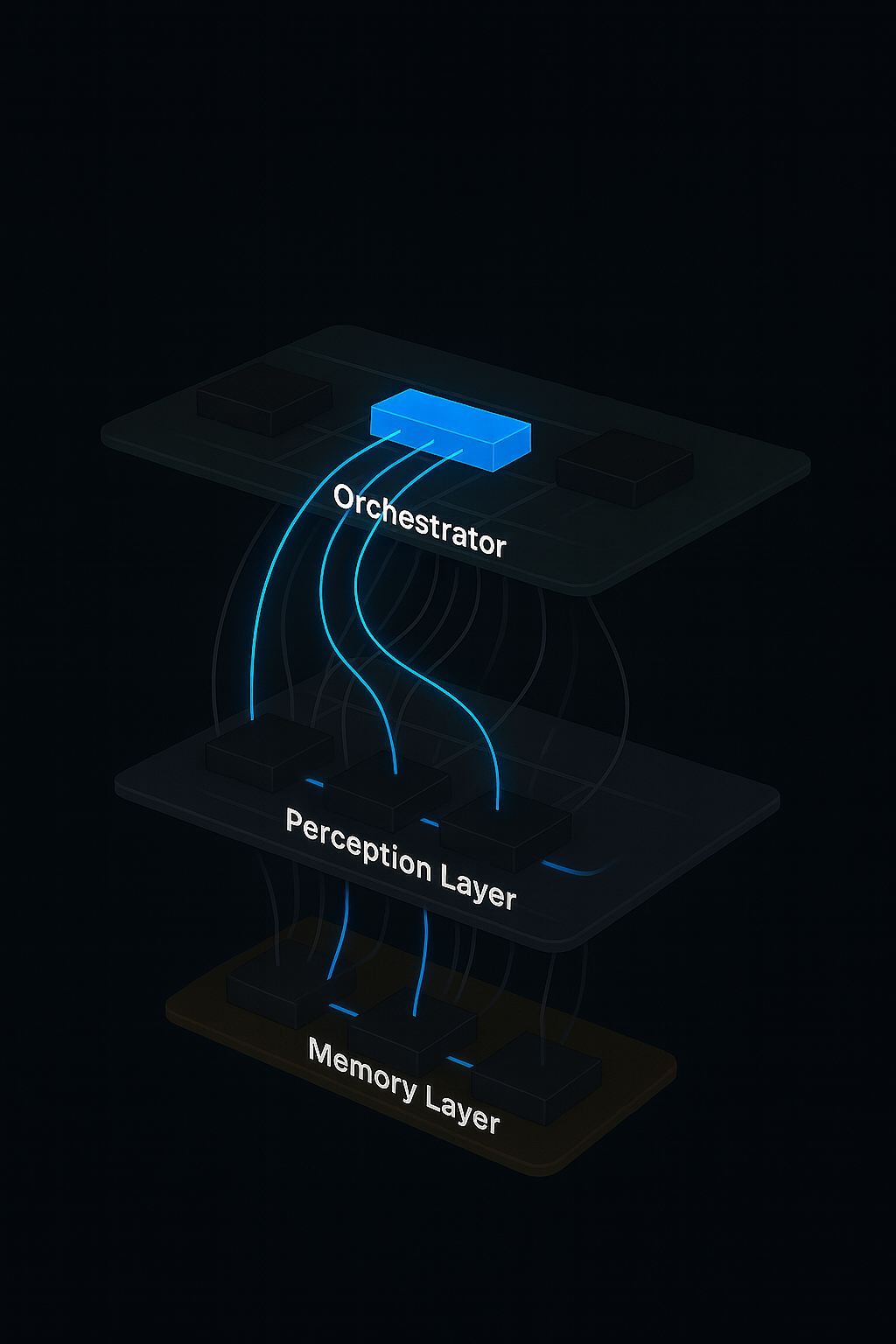
Multi-Agent Orchestrator
All agents read and write to a shared context fabric, streamed over the Signal Bus. The Cognitive Loop runs scheduling, contention control, and drift detection.
Tools & Connectors
Agents call tools via typed interfaces. Permissions come from AGS++ roles; secrets never leave the vault.
SQL/NoSQL, S3, Blob, Graph, Streams
Work Orders, CMMS, ITSM, Slack/Email
Vision, Thermal, IoT/LoRa, ROS
IAM, KMS, Audit, DLP
Safety
Define what agents may see and do. Policies gate tool calls, cap scope, require approvals, and record signed traces for audit.
{
  "role": "cleaning-supervisor",
  "allow": ["read:occupancy", "create:work_order"],
  "deny": ["delete:work_order"],
  "requireApproval": [{"action":"dispatch_worker","by":"supervisor"}],
  "limits": {"zoneRadiusM":50, "priorityMax":3}
}
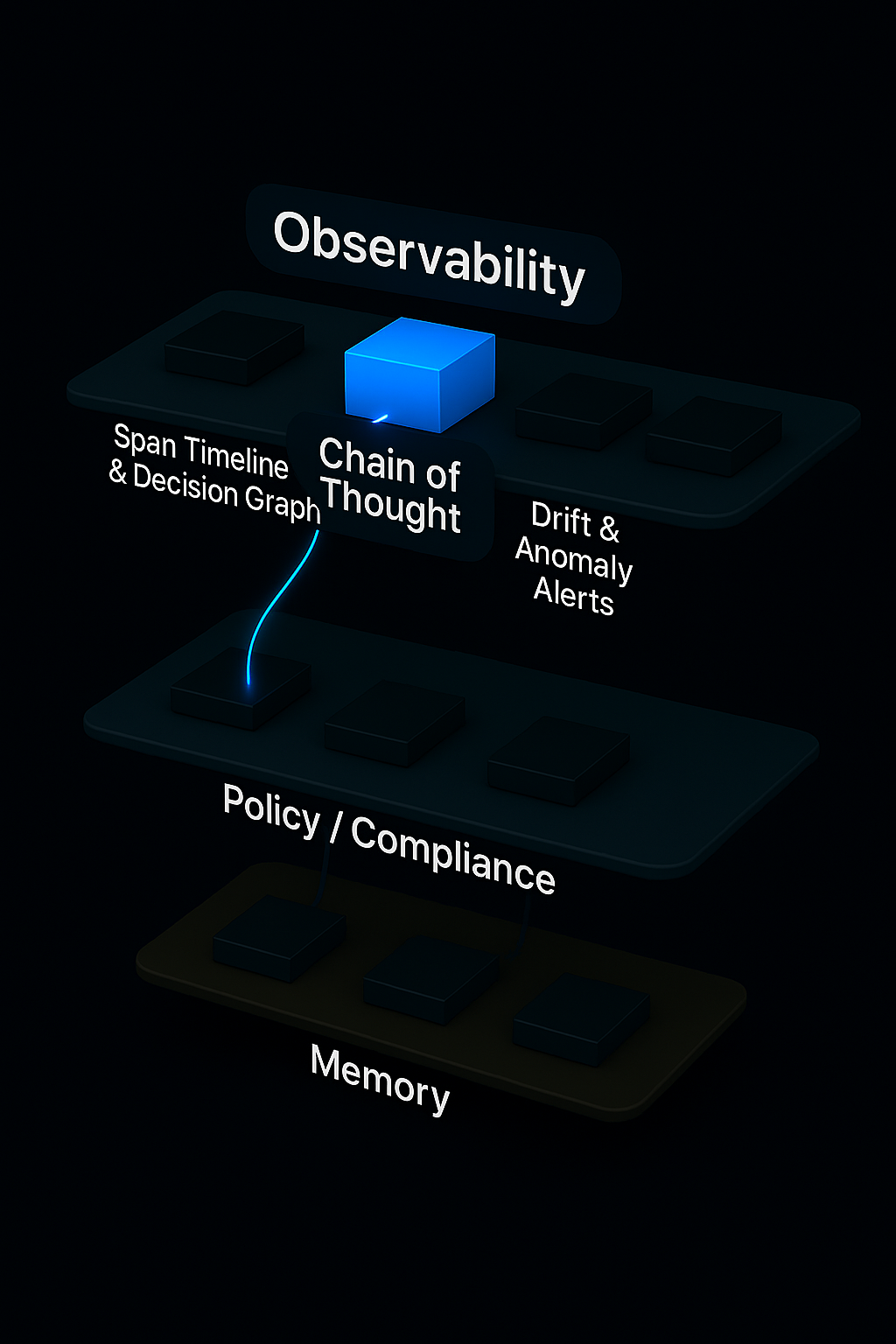
Observability
Agents retain memory, reason through structured chains of thought, and act within policy. Each decision is logged, explainable, and auditable — ensuring accountability without opacity.
Developer SDK
Use the Python SDK to register agents, declare tools, and run policy-bound decisions with memory, structured chain-of-thought, and audit-ready logs.
# pip install pegesis
from pegesis import Agent, tool, Memory, Policy

# 1) Declare a tool (auditable, typed I/O)
@tool(name="work_orders.create", version="1.0.0")
def create_work_order(site: str, zone: int, note: str) -> dict:
    # Implementation lives in your infra; SDK records the call and return.
    return {"status": "queued", "site": site, "zone": zone, "note": note}

# 2) Load policy & attach memory (short- and long-term)
policy = Policy.from_file("policies/facilities.json")
mem    = Memory.window(capacity=1024).with_vector_index("events", dims=384)

# 3) Register an agent with chain-of-thought style and compliance guardrails
agent = Agent(
    name="vision-guard",
    role="Detect hazards and escalate within policy",
    policy=policy,
    memory=mem,
    cot="structured"   # structured chain-of-thought trace stored in audit log
)

# 4) Subscribe to events and act under policy
@agent.on("thermal.alert")
def on_thermal(ctx):
    # Retrieve similar incidents for rationale (memory read)
    prior = agent.memory.search("events", query=ctx.signature, k=3)

    # Policy gate: only create work orders when severity meets contract
    if ctx.severity >= policy["SLA.minSeverity"]:
        # Every tool call is recorded with input/output for audit
        return create_work_order(site=ctx.site, zone=ctx.zone, note="Thermal anomaly")

    # Otherwise, store observation and exit
    agent.memory.append("events", {"site": ctx.site, "kind": "thermal", "ok": True})
    return {"status": "observed"}

# 5) Hand-off with full reasoning trace and policy context
@agent.on("vision.object.detected")
def on_object(ctx):
    if ctx.label in policy["restrictedObjects"]:
        return agent.handoff("compliance-auditor", ctx, reason="Restricted object detected")

# 6) Run once or as a service (streamed decisions with signed traces)
if __name__ == "__main__":
agent.serve(":8081"){
"SLA": { "minSeverity": 0.7, "minCoverage": 0.85 },
"restrictedObjects": ["weapon", "open_flame"],
"schema_contract": {
"audit": { "signed_traces": true, "pii_redaction": "standard" },
"tools": {
"work_orders.create": {
"allowed_hours": "06:00-22:00",
"required_fields": ["site", "zone", "note"]
}
}
}
}• Short-term window memory for the active run
• Long-term vector index for retrieval (events, incidents, SOPs)
• Structured chain-of-thought captured as a signed reasoning trace
• Policy-aware recall (e.g., PII redaction, retention limits)
• Full audit trail of inputs, tool calls, and outcomesDeployment
Run agents on GPUs, Apple silicon, or edge boxes (Orin/ARM). Central policy & secrets, local execution.
Autoscale workers, observability baked in.
Air-gapped runtime with signed updates.
Low-latency control for robots & sensors.
FAQ
See how Pegesis coordinates specialists with end-to-end safety and traceability.